How to Reduce Energy Bills in Your UK Home: The 2025/26 Efficiency Guide
A comprehensive guide for UK homeowners, specifically in London and Kent, on reducing energy bills through immediate habit changes, government grants like the Boiler Upgrade Scheme, and long-term renewable investments.
The fastest way to cut your energy bills is by making immediate behavioral changes: turning your boiler flow temperature down to 60°C, switching to LED bulbs, and draught-proofing doors and windows. These 'quick wins' can typically reduce energy consumption instantly without the need for significant upfront investment or professional installation.
With energy prices remaining a primary concern for households across London and the South East, finding sustainable ways to manage costs is essential. Whether you are living in a Victorian terrace in Bromley or a detached property in rural Kent, the path to lower bills involves a combination of immediate efficiency tweaks and long-term structural improvements. This guide explores how you can navigate the current landscape of UK energy, including the latest 2026 government schemes and renewable technologies.
How can I lower my heating costs immediately?
Heating accounts for the largest portion of most UK energy bills. Before investing in new hardware, you can potentially save up to 10% on your heating bill by simply turning your thermostat down by just 1 degree British Gas.
Another highly effective 'quick win' is adjusting your condensing boiler's flow temperature. Many boilers are set to a factory default that is too high to operate at maximum efficiency. By reducing the flow temperature to 60°C or lower, the boiler can stay in 'condensing mode' more often, which typically improves efficiency without significantly impacting the warmth of your home Ofgem.
In London and Kent, where many homes feature older wooden window frames or original doors, draught-proofing is vital. Using simple foam strips or 'sausage' draught excluders can prevent heat from escaping, meaning your heating system doesn't have to work as hard to maintain a comfortable temperature Heatable.
What are the best low-cost home improvements for energy efficiency?
If you are looking to move beyond habit changes, several low-cost investments can offer a rapid return on investment:
- LED Lighting: Replacing all traditional bulbs with LEDs is one of the simplest ways to reduce electricity use. LEDs use significantly less power and have a much longer lifespan Low Energy Supermarket.
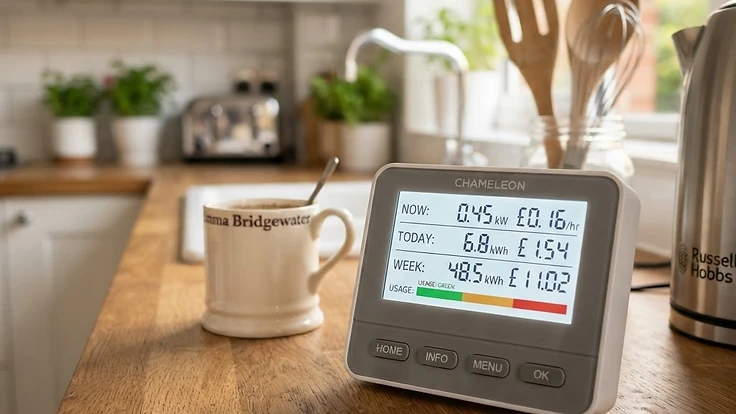
- Smart Meters: Installing a smart meter allows you to track your energy use in real-time. This visibility often leads to more conscious consumption habits, helping households identify 'energy vampires'—appliances that consume power even when on standby MoneyHelper.
- Reflective Radiator Panels: For homes in Kent with solid brick walls, placing reflective foil behind radiators on external walls can help bounce heat back into the room rather than letting it escape through the masonry.
Why is insulation critical for London and Kent homes?
Insulation is the foundation of an energy-efficient home. In an uninsulated property, up to a quarter of heat is lost through the roof Heatable. Increasing loft insulation from 120mm to the recommended 270mm could reduce your energy bills by around £20 per year, though the primary benefit is the increased comfort and reduced demand on your boiler Kent County Council.
For many residents in the South East, cavity wall insulation is another major factor. A typical semi-detached house could potentially save around £280 a year on energy bills by insulating wall cavities Met Office. Given the coastal winds in parts of Kent and the urban heat island effect in London, maintaining a stable internal temperature through high-quality insulation is the most effective way to 'future-proof' your property.
What government grants are available in 2025 and 2026?
The UK government has introduced several initiatives to help homeowners transition to cleaner, cheaper energy. The Warm Homes Plan, launched in early 2026, aims to upgrade up to 5 million homes with solar panels, batteries, and heat pumps Parliamentary Research.
Key schemes currently available include:
- Boiler Upgrade Scheme (BUS): This provides upfront grants of up to £7,500 for air-to-water heat pumps and £2,500 for air-to-air heat pumps Kent County Council. These grants make the transition from gas or oil heating much more affordable.
- Warm Homes: Local Grant: Targeted at low-income households, this provides funding for energy efficiency measures and low-carbon heating GOV.UK.
- VAT Reductions: As of October 2026, the UK government implemented a temporary 0% VAT rate on home electricity bills, which is estimated to save the average household approximately £45 per year VATCalc.
Is it worth investing in renewable energy now?
For homeowners in the South East, which enjoys some of the highest solar irradiance levels in the UK, renewable technology is increasingly viable. Solar panels combined with battery storage allow you to capture energy during the day and use it during peak evening hours, potentially reducing your reliance on the grid significantly.
Heat pumps are also a major consideration. They are typically three times more efficient than traditional gas boilers Kent County Council. While the initial cost is higher, the combination of the £7,500 BUS grant and lower running costs can make them a financially sound long-term investment, especially as gas prices remain volatile.
Key Takeaways for Reducing Your Bills
- Lower your flow temperature: Set your condensing boiler to 60°C to improve efficiency immediately.
- Seal the gaps: Draught-proof doors and windows to keep heat inside.
- Upgrade to LEDs: Swap old bulbs for modern LEDs to cut electricity consumption.
- Check grant eligibility: Look into the Boiler Upgrade Scheme (£7,500) and the Warm Homes Plan for subsidized upgrades.
- Insulate properly: Ensure your loft has at least 270mm of insulation to prevent significant heat loss.
- Monitor usage: Use a smart meter to identify and eliminate unnecessary energy spend.
By taking a tiered approach—starting with free habit changes, moving to low-cost improvements, and finally utilizing government grants for renewable technology—homeowners in London and Kent can effectively manage their energy costs while contributing to a greener UK.