How Much Does a Heat Pump Cost in the UK? Full Price Breakdown
What an air source heat pump installation actually costs in the UK, what sits inside the price, how the government grant changes the figure, and what drives a quote up or down.
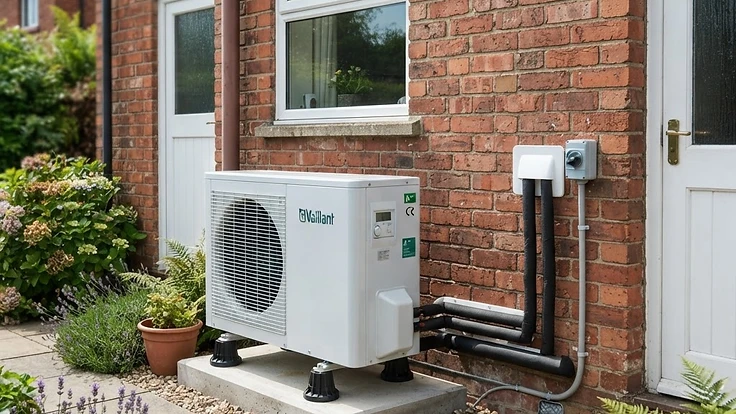
In short: most UK air source heat pump installations fall between £8,000 and £16,000 before any grant, with a typical 3-bedroom home landing around £11,000–£13,000. The Boiler Upgrade Scheme grant is deducted by your installer before you pay, which for many households brings the out-of-pocket cost down to roughly £3,500–£6,500.
What the price actually covers
A heat pump quote is not a boiler swap with a different box. A properly designed installation includes:
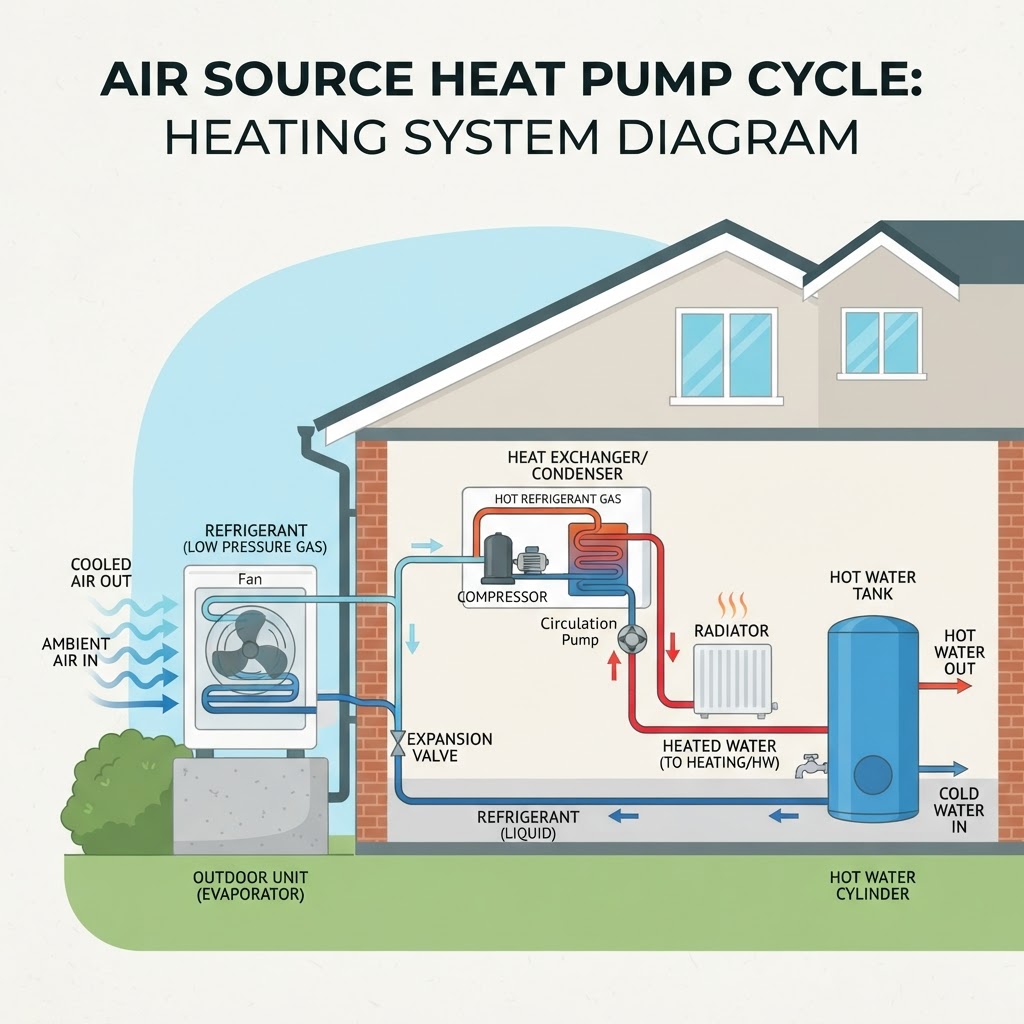
- The heat pump itself — an outdoor unit, typically 5kW to 16kW depending on the heat loss of the property.
- A hot water cylinder — heat pumps run at lower temperatures, so a compatible, well-insulated cylinder with a large coil is essential. Most homes coming off a combi boiler will need one, and need somewhere to put it.
- Radiator or emitter upgrades — some rooms usually need larger radiators to deliver the same heat at a lower flow temperature.
- Pipework and hydraulics — buffer or volumiser where needed, pumps, valves, and often upgrades to undersized primary pipework.
- Electrical work — a dedicated supply, isolation, and sometimes a consumer unit upgrade.
- Base and siting — a level plinth or wall brackets, condensate drainage, acoustic positioning.
- Design, commissioning and paperwork — the room-by-room heat loss calculation, MCS certification, building control notification and the grant administration.
Typical price ranges
- Small flat or 1–2 bed home (4–6kW): £8,000–£10,500
- 3-bed semi (6–9kW): £10,500–£13,500
- 4–5 bed detached (10–14kW): £13,000–£18,000
- Large or poorly insulated property (14kW+): £16,000 upwards
Add roughly £1,500–£4,000 where a significant number of radiators need replacing, or where a cylinder has to be installed in a home that has never had one.
The Boiler Upgrade Scheme
England and Wales operate the Boiler Upgrade Scheme (BUS), which provides a fixed grant towards an air source heat pump installed by an MCS-certified installer. The grant is claimed by the installer and deducted from your invoice — you never have to fund it and reclaim it. Scotland runs its own grant and loan scheme through Home Energy Scotland.
You are potentially eligible if you own the property, it has a valid EPC without outstanding loft or cavity wall insulation recommendations, and the system replaces a fossil-fuel heating system. Grant levels, eligibility rules and closing dates are set by government and change from time to time — always check the current official guidance, or ask us to confirm what applies to your property on the day.
What pushes a quote up
- A high heat loss. Bigger heat loss means a bigger heat pump, bigger emitters and a bigger bill. Insulation improvements often pay for themselves twice: lower running costs and a smaller system.
- Microbore pipework. Very small-bore existing pipework may need replacing on some circuits.
- Difficult siting. Long pipe runs, restricted access, or acoustic constraints near a boundary all add labour.
- No cylinder space. Finding a home for a 180–250 litre cylinder occasionally means building work.
- Listed buildings or conservation areas. Additional consents and more careful siting.
What pushes it down
- Good existing insulation and glazing.
- Existing large radiators or underfloor heating — these already suit low flow temperatures.
- An existing vented cylinder space and sound 22mm primary pipework.
- A straightforward external wall to mount or stand the unit against.
Running costs, not just capital costs
A well-designed heat pump delivers roughly 3–4 units of heat per unit of electricity across a year (its seasonal performance factor). Whether your bills fall depends on the price you pay for electricity versus gas or oil, and on the flow temperature the system runs at. Homes on a heat-pump-friendly electricity tariff and running at low flow temperatures do best. Homes with an oversized unit short-cycling at 55°C do worst — which is why the design work matters more than the badge on the box.
Why we survey before quoting
We will not price a heat pump from a phone call. Every quote we issue is built on a room-by-room heat loss calculation to the recognised standard, a check of your existing emitters and pipework, an assessment of cylinder space, and a siting and noise assessment. That is how you avoid the two classic failures: an oversized unit that costs more and runs badly, and an undersized unit that leaves you cold in January.
Our free online heat-loss calculator will give you an indicative heat demand and system size in a few minutes, so you can see roughly where you sit before booking a technical survey.