Can a Heat Pump Work in an Older UK Home? Victorian and Solid-Wall Properties
Heat pumps are routinely installed in Victorian terraces, 1930s semis and solid-wall cottages. Here is what actually determines whether one will work well in an older property.
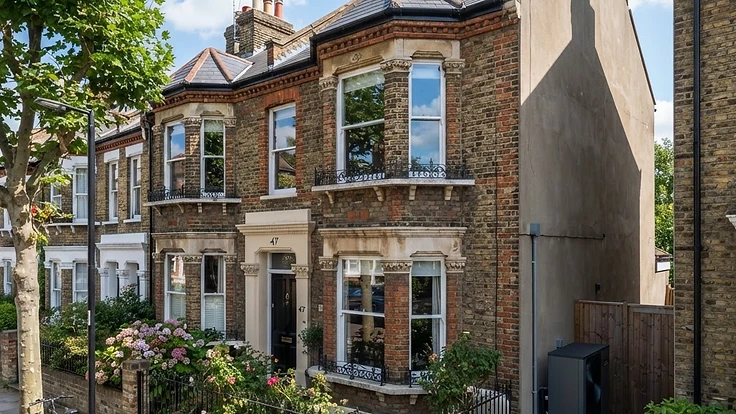
In short: yes. Age is not the deciding factor — heat loss is. Plenty of Victorian terraces and 1930s semis run heat pumps successfully. What matters is whether the fabric loses heat faster than the emitters can replace it at a low flow temperature, and that is measurable before you commit to anything.
The real question is heat loss, not build date
Every property has a heat loss figure, measured in watts, calculated room by room from wall, roof, floor, window and ventilation losses. A well-maintained 1890s terrace with loft insulation, secondary glazing and a sheltered mid-terrace position can have a lower heat loss than a draughty 1970s detached bungalow.
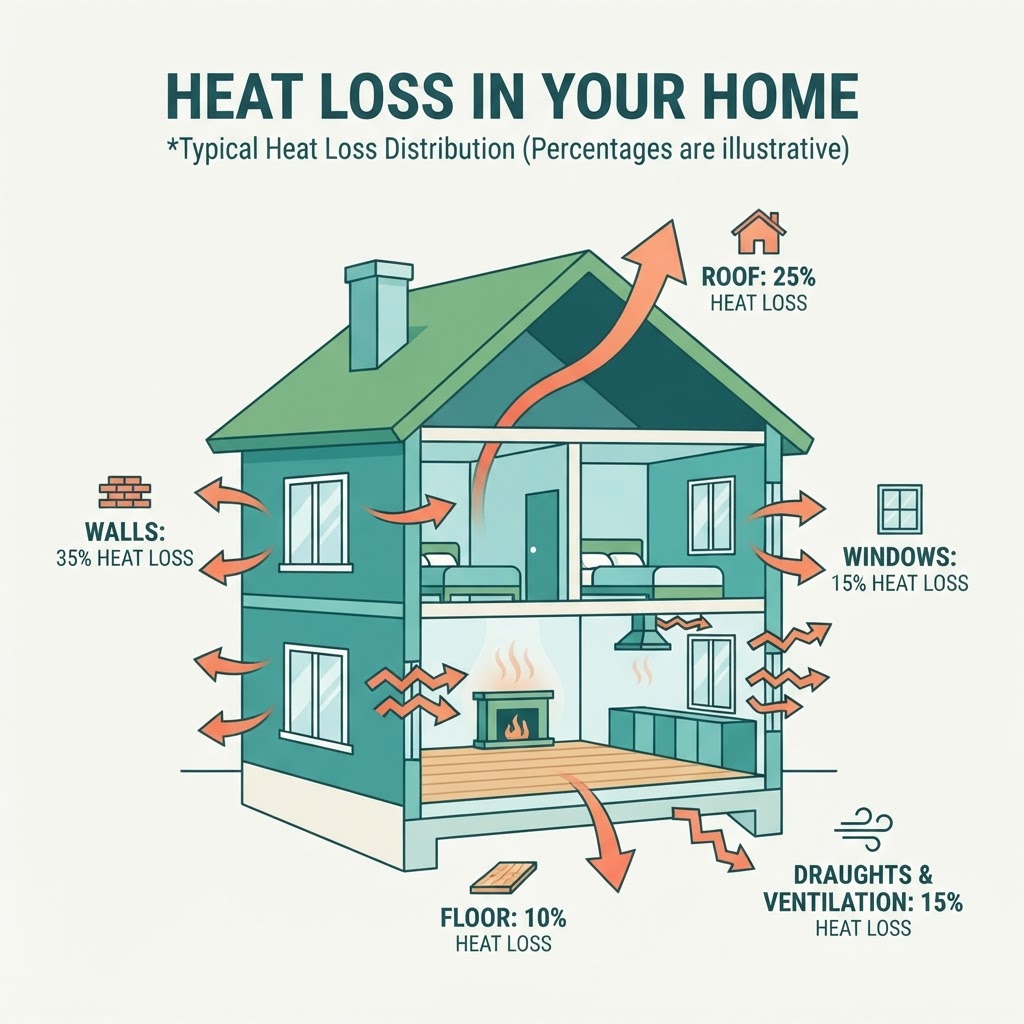
Once we know the heat loss, everything else follows: the size of the heat pump, the size of each radiator, and the flow temperature the system can be designed around.
Why flow temperature is the crux
A gas boiler will happily push out water at 70–75°C. A heat pump is most efficient at 35–45°C. Lower water temperature means each radiator emits less heat — typically less than half what it would at boiler temperatures. So either the room needs a larger emitter, or the system needs to run hotter and less efficiently.
In older homes with high heat loss, the honest options are:
- Reduce the heat loss — loft insulation, draught-proofing, floor insulation, better glazing, and where practical internal or external wall insulation.
- Increase the emitters — larger or double/triple-panel radiators in the rooms that need them, or underfloor heating where floors are coming up anyway.
- Accept a higher flow temperature — modern high-temperature heat pumps can run at 60–70°C. They will work in almost any home, but efficiency and therefore running cost is worse than a low-temperature design.
Most real projects use a combination of the first two.
The improvements that give the best return in older homes
- Loft insulation to 270mm — cheap, fast, and usually the single biggest win.
- Draught-proofing — sash windows, floorboards, letterboxes and unused chimneys. Very low cost, immediate comfort improvement.
- Suspended timber floor insulation — significant in Victorian properties, and often accessible from below or during other works.
- Secondary glazing — frequently the only realistic option in a conservation area, and acoustically excellent.
- Solid wall insulation — the most expensive step and not always appropriate, but transformative where it can be done properly with attention to moisture risk.
What we look for on a survey of an older property
- Wall construction and thickness, and any evidence of damp or previous remedial work
- Loft insulation depth and continuity, and roof room conversions
- Floor construction, and whether voids are ventilated
- Glazing type and condition, and draught paths
- Existing radiator sizes and whether pipework is microbore
- Space for a hot water cylinder — often the loft, an old airing cupboard or a redundant chimney breast recess
- Somewhere to site the outdoor unit that satisfies noise limits and, in a terrace, respects neighbours and access
Planning and conservation
Air source heat pumps in England usually fall under permitted development if siting, size and noise conditions are met, but listed buildings and conservation areas need checking case by case, and rules differ across the UK nations. In practice, siting is usually solvable: side returns, rear gardens and discreet screening all work. We check the position and consents before the quote goes out, not afterwards.
What "does not work well" actually looks like
The failures you read about are almost always design failures, not fabric failures:
- An oversized unit that short-cycles and never settles
- A system commissioned at 55°C because the radiators were never upsized
- A weather compensation curve left at factory defaults
- A property with an untouched, uninsulated loft
None of those are inherent to old houses. All of them are avoidable.
Our approach
We calculate the room-by-room heat loss, model the system at more than one flow temperature, and show you the trade-offs in plain figures: what the running cost looks like at 45°C with three radiators upgraded, versus 55°C with none. If the honest answer for your property is "insulate first, then revisit", we will tell you that.
Start with our free heat-loss calculator for an indicative figure, then book a technical survey for the measured version.